as an operation and maintenance engineer, i provide executable recommendations and security reinforcement suggestions when deploying vps in cambodia. this article starts from the four dimensions of network, hardware, operation and maintenance management and security strategy, taking into account performance and compliance, and helps enterprises quickly establish a robust online service environment.
cambodia has its own peculiarities in southeast asia's network topology: international egress bandwidth, data center tiers, and local compliance requirements may differ from neighboring countries. operations engineers should pay attention to delays, packet loss, local legal restrictions on data and content, and the quality of the supplier's operation and maintenance support to ensure business stability.
when choosing a cambodia vps, you should first evaluate network connectivity, bandwidth peak and sla, node redundancy and backup capabilities. it is also necessary to clarify whether the host's virtualization technology, scalability, snapshot and mirroring support, and operation and maintenance interfaces (api, control panel) meet the requirements for automated operation and maintenance.
evaluate the latency and stability of links within and outside the region, paying attention to international entry and exit points and content distribution strategies. it is recommended to use multi-line or cdn as a supplement, and develop a bandwidth monitoring and alarm mechanism to prevent business interruption or additional cost risks caused by sudden traffic.
pay attention to the vps disk type (such as ssd/nvme), iops and throughput capabilities, as well as the impact of the number of cpu cores and memory configuration on concurrent connections. applications that are sensitive to io bottlenecks should give priority to high io configurations or tiered storage strategies, and perform stress testing before going online.
security hardening should be promoted simultaneously from the four layers of border protection, host hardening, access control and log auditing. establish a hierarchical protection strategy, the principle of least privilege and an emergency response process, and conduct vulnerability scanning and patch management regularly to ensure that operation and maintenance changes are traceable and risks are controllable.
enforce key login and disable password login, enable multi-factor authentication and role-based access control (rbac). use springboard machines and bastion machines for remote management, limit management source ips, and audit and alert sensitive operations to reduce internal and external abuse risks.
keep the operating system and key components updated in a timely manner, using immutable base images and automated configuration management tools. deploy host-level firewalls and intrusion detection/prevention (hids/nids) to minimize port exposure and encrypted transmission of databases and applications to prevent data leakage.
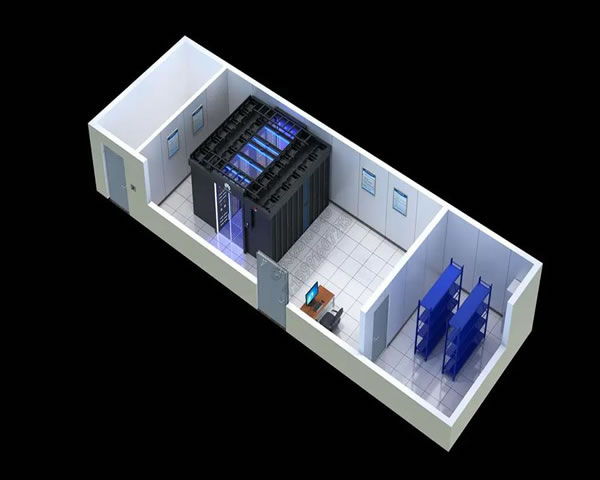
build a comprehensive monitoring system covering hosts, networks, application indicators and business indicators, and configure reasonable alarm strategies. develop off-site backup and recovery procedures, regularly practice failover and recovery procedures, and verify whether backup availability and rto/rpo meet business requirements.
when deploying in cambodia, you need to pay attention to local data sovereignty and legal compliance requirements, and formulate reasonable log storage strategies and encryption measures. centralized log collection and long-term archiving facilitate auditing while ensuring log access is controlled and regularly reviewed.
prioritize the adoption of infrastructure as code (iac) and continuous integration/continuous delivery (ci/cd) processes to improve deployment consistency and rollback capabilities. implement patch distribution, configuration inspection and security baseline assessment through automated scripts, reducing risks caused by manual operations.
from the perspective of an operation and maintenance engineer, the selection and security reinforcement of cambodian vps should take into account network connectivity, stable performance and controllable security. following the three principles of least privilege, automated operation and maintenance, and continuous monitoring, combined with local compliance requirements and backup drills, can significantly reduce operational risks and improve service availability.
- Latest articles
- Bandwidth Management: Techniques for Ensuring Server Stability and Controlling Network Peaks at Hong Kong Server Farms
- How does Hong Kong’s advanced computer room management system ensure isolation in multi-tenant environments?
- Configuration considerations and security risk warnings for free Hong Kong cloud server trial software
- Reliability Assessment Report of Hong Kong’s Native IP Airports in Cross-Border Logistics Scenarios
- Monitoring Practices: Online Monitoring and Alert Settings for the Stability of Server Clusters in Hong Kong
- Recommended best practices for security reinforcement and data backup when renting CN2 servers in Taiwan
- Best Practices for Cost Savings in Renewing and Managing Tariffs for Taiwan’s Native IP Odin
- Design of monitoring and backup solutions to ensure business continuity for Oracle VPS in Singapore
- Summary of CN2 connection methods supported by cloud service providers in Vietnam and operational considerations
- Clarifying Common Misconceptions: What Does “Korean Original IP” Mean? Comparing Market Rumors with the Truth
- Popular tags
-

learn the best uses for dynamic vps in cambodia
learn the best uses of cambodia dynamic vps, how to use it to improve website performance, enhance data security, and optimize seo results. -

Current market status and development prospects of VPS in Cambodia
This article analyzes the current situation and development prospects of the Cambodian VPS market and provides valuable references for enterprises and individual users. -

The Role of Tencent Cambodia Cloud Servers in Enterprise Multi-Region Disaster Recovery Strategies and Configuration Recommendations
This document introduces the role of Tencent Cloud CAM servers in enterprise multi-region disaster recovery strategies and provides configuration recommendations. It covers aspects such as network connectivity, data synchronization, failover, security compliance, and disaster recovery testing, to help establish a reliable cross-regional disaster recovery system.